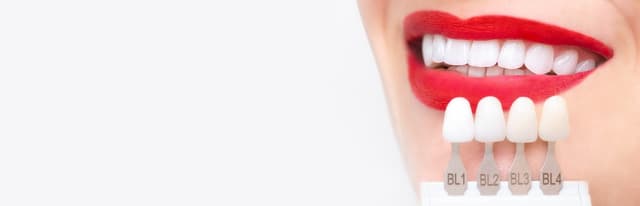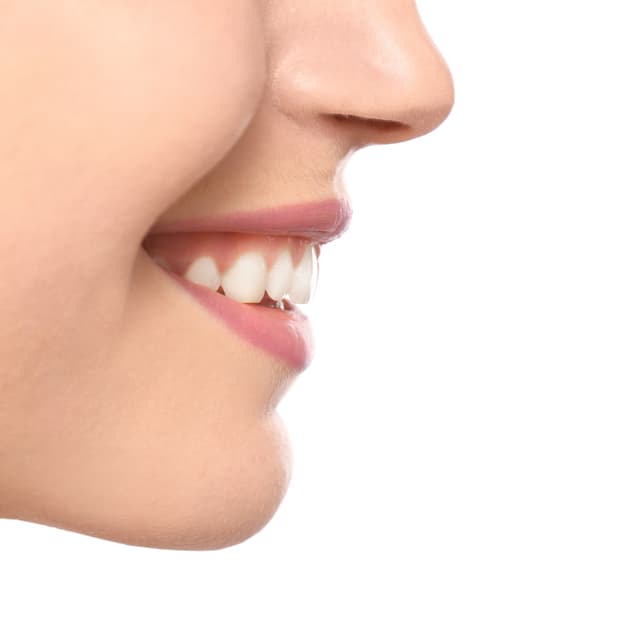
Porcelain veneers occupy the proven middle ground of cosmetic dentistry: more durable and stain-resistant than composite resin, and in most cases a straightforward, single-trip procedure. They are not a recent trend — ceramic veneers have been placed in dental practices for decades, with a well-documented clinical track record. What changes in Istanbul is not the material or the clinical standard, but the cost of the skilled labour and clinic overhead required to deliver the result.
Why porcelain? Durability, aesthetics and stain resistance
The case for choosing porcelain over composite resin comes down to three practical differences that matter over the life of the veneers.
Durability. Glazed dental ceramic is significantly harder and more wear- resistant than composite resin. Under normal conditions — no heavy grinding, no biting into exceptionally hard objects — porcelain veneers are expected to last 10–15 years. Composite veneers typically need replacement or significant re-polishing at around 4–8 years.
Stain resistance. The glazed outer surface of a porcelain veneer does not absorb pigment the way composite does. Coffee, tea, red wine and tobacco cause surface staining on natural enamel and composite much more readily than on glazed ceramic. This matters particularly if you are treating multiple teeth and want the result to stay consistent without polishing appointments.
Light transmission. Dental porcelain has an internal translucency that closely mimics natural enamel. Unlike an opaque composite or a solid metal-backed crown, a well-made porcelain veneer lets light through in a graduated way, giving the tooth a lifelike depth. This is the quality that separates natural-looking cosmetic dentistry from results that look artificial under different lighting conditions.
Porcelain is not automatically the right choice for every patient. For a single chipped tooth, a narrow gap or a minor reshaping, composite bonding may be the more conservative and cost-proportionate option. Your specialist will compare the options honestly at your consultation — the goal is always the least intervention that genuinely solves your problem.
Preparation: what conservative actually means
The “Turkey teeth” stories that circulate online almost invariably describe one specific problem: healthy teeth ground down aggressively — sometimes to near-pegs — to accommodate bulk crowns or poorly planned veneers. This is not what a correctly performed porcelain veneer involves.
A standard porcelain veneer preparation removes approximately 0.3–0.7 mm from the front (labial) surface of the tooth. To put that in physical context: the enamel on the front face of an upper incisor is roughly 1–1.5 mm thick. A veneer preparation removes less than half of that, leaving the majority of the natural tooth structure completely intact. The tooth is shaped — not amputated.
Why is any preparation needed at all? Without reducing the tooth surface slightly, placing a porcelain shell on top would make the veneer look bulky — the tooth would appear to project forward. The preparation creates the space needed for the veneer to sit flush and look natural. In select cases where the tooth is naturally small or slightly set back, a no-prep or minimal-prep approach is possible — the veneer sits on untouched enamel. Your specialist assesses your anatomy at consultation and will confirm which applies to your case.
The preparation is performed under local anaesthetic. Most patients report no discomfort during the procedure; mild sensitivity on the prepared teeth is common in the days before permanent veneers are fitted. Temporary veneers are placed immediately so you leave the clinic looking complete while the laboratory fabricates your permanent restorations.
A crown requires far more extensive preparation than a veneer — typically 1.5–2 mm circumferentially around the whole tooth. For a cosmetically healthy tooth that is structurally sound, a veneer is nearly always the more conservative and appropriate choice. If a clinic proposes crowns as the route to a cosmetic smile change on intact teeth, that is worth questioning carefully.
Longevity and how to protect your veneers
Porcelain veneers are not indestructible, but they are resilient under normal use. The factors most likely to shorten their lifespan are:
- Bruxism (teeth-grinding). Grinding generates sustained lateral forces that can fracture ceramic. If you show signs of bruxism, a custom night guard is not optional — it is a requirement for protecting the investment of your veneers.
- Biting hard objects. Fingernails, pen caps, ice, hard crusts and similar put point-loading stress on ceramic that it is not designed for. Porcelain is strong in compression but relatively brittle under flexion.
- Dental hygiene.Veneers themselves don't decay — but the teeth underneath them and the gum margins around them do. Poor oral hygiene can compromise the bond margin and contribute to gum recession, both of which affect the long-term appearance and integrity of the restoration.
Routine care is straightforward: twice-daily brushing with a non-abrasive toothpaste, interdental cleaning, and a check-up with your local dentist once or twice per year. Abrasive whitening toothpastes should be avoided as they can dull the glaze surface over time.
Porcelain veneer cost in Turkey
Porcelain veneers at our Istanbul partner clinic start from €220 per tooth. The most common treatment involves 8–10 upper teeth — the teeth visible in a natural smile — which places the indicative range for a full upper smile at €1,760–€2,200 before any additions. For a full upper-and-lower smile of 16–20 veneers, indicative costs start from €3,520.
These prices are for standard porcelain veneer cases; the final quoted cost is specific to your teeth, the number of units needed, and any preparatory treatment identified at consultation. For a full breakdown including comparisons with UK and Irish prices, see the veneers cost guide. To get an itemised quote for your case, use the free assessment form — a specialist reviews your photos and replies usually within 24 hours.