When patients ask for the most natural-looking, longest-lasting veneer option available in Istanbul, the answer is almost always e.max — IPS e.max, Ivoclar Vivadent's lithium disilicate ceramic. It is stronger than conventional feldspathic porcelain, more translucent, and capable of being fabricated at thicknesses that allow ultra-conservative or no-prep laminate placement. The same material is used in high-end dental practices across Europe and the US; the price difference in Istanbul reflects labour and overhead costs, not a difference in what goes on your teeth.
What is e.max — the material explained
IPS e.max is a glass-ceramic manufactured by Ivoclar Vivadent, a dental materials company based in Liechtenstein. The material's technical name is lithium disilicate: a ceramic reinforced with lithium disilicate crystals, which give it a flexural strength of approximately 400 MPa — roughly four to six times stronger than conventional layered feldspathic porcelain.
For veneer fabrication, e.max is available in two main forms: IPS e.max Press (used in a heat-press technique in the laboratory) and IPS e.max CAD (blocks machined with CAD/CAM milling systems). Both produce the same material properties; the difference is the fabrication route. Our partner laboratory works to ISO-standard processes and uses certified Ivoclar material systems.
The clinical properties that distinguish e.max from other ceramic options are:
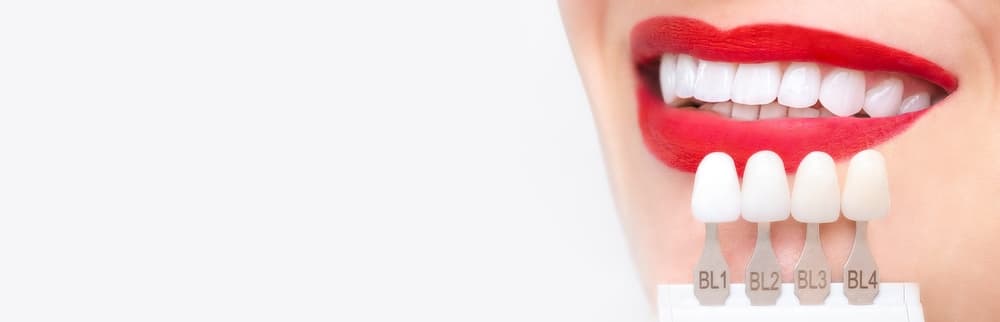
- Translucency. The internal light-transmission of lithium disilicate closely mimics natural enamel — with a graduated opalescence that makes it very difficult to distinguish a well-made e.max veneer from a natural tooth in normal lighting.
- Strength. The higher flexural strength is particularly meaningful for ultra-thin laminates, where the piece must survive the seating process and everyday loading without fracture.
- Consistency. Pressed and milled e.max produces a more uniform result than hand-layered feldspathic porcelain, which reduces the variability between units in a full smile case.
Laminate veneers: ultra-thin, minimal preparation
“Laminate veneers” and “e.max veneers” are not quite synonyms, though the terms are often used together. A laminate veneer specifically emphasises thinness — and e.max's strength is what makes ultra-thin laminates clinically viable. Where conventional porcelain might fracture at 0.3–0.4 mm thickness, a well-made e.max laminate is robust enough to function reliably at those dimensions.
Why does thinness matter? Because a thinner veneer requires less tooth preparation — sometimes none at all. In suitable cases, a 0.3 mm e.max laminate can bond directly to the intact enamel surface, leaving the natural tooth entirely untouched underneath. This is what “no-prep laminates” or “prepless veneers” means in clinical terms.
Suitability for no-prep or minimal-prep laminates depends on your specific teeth:
- Teeth that are naturally slightly small or set back — providing inherent space for the veneer without the result looking bulky
- Cases where the desired shade change is modest — very dark underlying tooth shade requires more masking material and therefore some preparation
- Gaps, minor length additions or subtle reshaping where no bulk reduction is needed
If your teeth are already prominent, or if you are seeking a significant whitening effect, some enamel reduction is still necessary even with e.max laminates — though it will be minimal (typically 0.3–0.5 mm rather than the 0.5–0.7 mm needed for thicker ceramic work). Your specialist confirms suitability at consultation after examining your tooth anatomy and the shade change required.
The “no-prep” terminology has become a marketing phrase as well as a clinical description. Not every patient is suitable for genuinely no-prep laminates. What matters is that preparation is minimised to what is clinically necessary — not that it is zero at any cost. Our partner specialists take only what the case requires; they will tell you honestly whether no-prep is viable for your teeth.
E.max vs porcelain vs composite: which is right for you?
All three materials are valid options — the right choice depends on your clinical situation, priorities and budget.
Choose e.max if you want the most natural light-transmission for a full smile case, if ultra-thin laminate placement is being considered, or if you want the highest durability with the best long-term aesthetics. E.max is the default recommendation for patients seeking a comprehensive smile transformation in Istanbul.
Conventional porcelain is an excellent choice for most veneer cases. The aesthetic and durability differences versus e.max are most noticeable at very thin preparations and in direct comparison; for many patients, the difference in final appearance is subtle. Porcelain veneers start from €220 per tooth — a meaningful saving over e.max if budget is a consideration.
Composite is the most conservative and least expensive option, often completed in a single visit without laboratory involvement. For targeted bonding work, single-tooth repairs or patients who want a reversible approach, composite can be the right recommendation — not a lesser substitute. See the composite veneers guide for a full honest account of its strengths and limitations.
E.max veneer cost in Turkey
E.max veneers at our Istanbul partner clinic start from €260 per tooth. For a standard 8-tooth upper smile, the indicative cost starts from €2,080; for a 10-tooth upper smile, from €2,600. A full upper-and-lower case of 16–20 units starts from €4,160 indicatively.
The price premium over standard porcelain reflects the material cost of Ivoclar e.max and the laboratory time involved in working with it — not a different clinical pathway. The same specialist, the same preparation technique and the same guarantee structure apply.
For a full breakdown and UK comparison, see the veneers cost guide. To get an itemised quote for your specific case, send photos through the free assessment form.