Veneers in Turkey
Natural porcelain and e.max veneers, shaped and shade-matched with you first, with conservative preparation.
Read guideVeneers and crowns are often talked about as if they were interchangeable, but they are genuinely different restorations that solve different problems. This guide explains what each one is, how much of your natural tooth they involve removing, and how to tell which your tooth actually needs — without removing more than necessary.
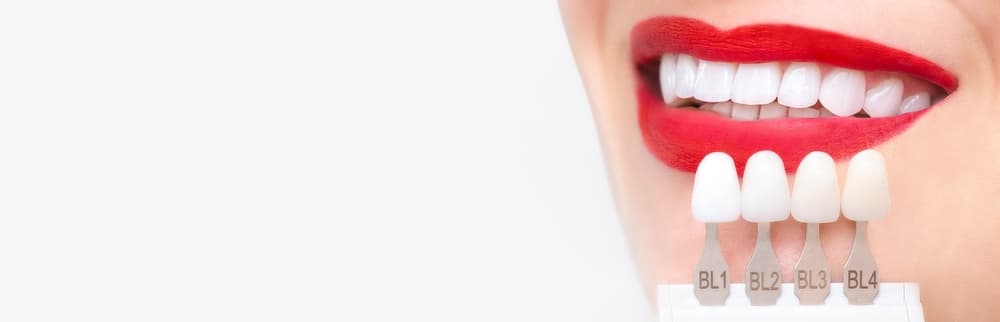
The simplest way to understand the difference is to picture how much of the tooth each one covers. A veneer covers one face; a crown covers the whole thing. Everything else — how much tooth is removed, when each is appropriate, what it costs — follows from that single distinction.
A veneer is a wafer-thin shell, usually made of porcelain, e.max ceramic or composite resin, that is bonded onto the front, visible surface of a tooth. It is a little like a false fingernail laid over the natural one. It changes the colour, shape and alignment of what people see when you smile, but it leaves the back and most of the sides of the tooth untouched. Because it only addresses the front face, a veneer is fundamentally a cosmetic restoration: it improves how a basically sound tooth looks.
A crown, by contrast, covers the entire tooth on every side, sitting over it like a thimble fits over a fingertip. It encases the tooth completely, which is why crowns are used when a tooth needs real structural protection — not just a cosmetic facelift. A crown rebuilds and shields a tooth that has been weakened, rather than simply resurfacing one that is intact. That full coverage is the crown’s great strength, and also the reason it requires more of the natural tooth to be reduced.
If you remember only one thing: a veneer covers the front surface, while a crown caps the entire tooth. That difference drives everything else about which one is right for you.
This is the part that matters most for your long-term tooth health, and it is where the honest conversation about “Turkey teeth” and conservative care belongs. The amount of natural tooth you give up is not the same for the two options, and it is not something you can get back.
Preparing a tooth for a veneer usually means removing a thin layer of enamel from the front surface so the veneer sits flush and looks natural rather than bulky. In many cases this is a small amount, and some minimal-prep or no-prep approaches remove almost no tooth at all. Keeping the preparation within healthy enamel is ideal, because the bond to enamel is strong and the tooth beneath stays largely intact and protected.
Preparing a tooth for a crown is a bigger undertaking. The tooth has to be reduced on all surfaces — front, back and sides — to make room for the cap to fit over it. That removes considerably more tooth structure than a veneer does. When a tooth genuinely needs that strength and coverage, the reduction is entirely justified and protective. The problem only arises when crowns are used on healthy teeth purely for speed or appearance, because then you are removing sound tooth that never needed to go.
This is the heart of the conservative-care message. Many of the worrying “Turkey teeth” stories involve healthy teeth being filed down for crowns when a more conservative veneer, or no treatment at all, would have served better. A responsible clinician removes only as much tooth as the case requires — and can explain exactly why each tooth is being treated the way it is. You can read more about avoiding over-treatment in our guide on Turkey teeth problems.
Whichever route you choose, the goal is to preserve as much healthy tooth as the situation allows. Be cautious of any plan that crowns many healthy teeth when veneers would do the job.
The right choice is decided by the condition of the tooth, not by a blanket preference. The question a good clinician asks is simple: how much sound, healthy tooth is left, and what does this tooth actually need?
A veneer tends to be the right answer when the tooth is essentially healthy and the issue is cosmetic. Typical cases include teeth that are slightly discoloured, mildly chipped, a little crooked or unevenly shaped, or that have small gaps you would like to close. If the tooth has plenty of healthy enamel and good underlying structure, a veneer improves the appearance while preserving most of the natural tooth — which is exactly what you want.
A crown becomes the better choice when the tooth needs protection, not just resurfacing. That includes teeth that are badly broken or cracked, teeth that have had root canal treatment and become more brittle as a result, teeth with large old fillings where little sound structure remains, and teeth that have worn down significantly. In these situations the tooth needs the full coverage a crown provides to hold everything together and reduce the risk of fracture. A veneer on such a tooth would not have enough healthy structure to bond to reliably, and could fail.
Sometimes the honest answer is a mixture. In a smile makeover, the healthy teeth may take veneers while the broken-down or root-treated ones take crowns, so each tooth gets the most appropriate restoration. That tailored approach is a good sign of careful planning. If you would like to see how this is applied across a whole smile, our Hollywood smile page explains how treatments are combined.
Cost and lifespan are usually the next two questions, and the honest answer is that they are broadly comparable — the bigger differences are clinical, not financial.
Porcelain veneers and crowns often sit in a similar price bracket per tooth, because both involve skilled preparation, a custom-made ceramic restoration and careful fitting. The exact figures depend on the material chosen, the complexity of your case and the clinic. Composite veneers are generally the most affordable option of the three, but they also have a shorter lifespan. Rather than choosing on price alone, it makes more sense to choose the restoration the tooth actually needs — an unnecessary crown is never good value, however it is priced. For honest indicative figures, see our veneers and crowns pages.
Both well-made veneers and well-made crowns commonly last many years with good care, and the lifespan depends far more on material quality, craftsmanship and your own habits than on which type you choose. In both cases it is usually not the ceramic that eventually fails but the bond loosening, decay forming in the natural tooth at the margin, grinding, or an accident. Treat any lifespan figure as a realistic average rather than a guarantee, and remember that good daily hygiene, a night guard if you grind, and regular check-ups extend the life of either restoration.
The practical takeaway is that the choice between a veneer and a crown should almost never come down to cost or a vague sense that one lasts longer. It should come down to what your tooth genuinely needs. If you would like an honest assessment of which is right for your specific teeth, you can request a free, itemised plan and have it explained tooth by tooth.
Natural porcelain and e.max veneers, shaped and shade-matched with you first, with conservative preparation.
Read guidePorcelain, zirconia and e.max crowns for teeth that need full protection — with honest indicative costs.
Read guideA full smile makeover designed around your face, often combining veneers and crowns where each is appropriate.
Read guideShare a few photos and get an honest plan that recommends veneers or crowns only where each is genuinely needed.
Read guide