Hollywood Smile in Turkey
A full smile makeover designed around your face — not a one-size mould — with honest pricing and real, consented results.
Read guideThe phrase ‘Hollywood smile’ gets used a lot and explained honestly very little. It is not a single procedure, and it should not mean one uniform set of blindingly white teeth. This guide gives the honest definition: what a Hollywood smile actually is, how it is designed around your face, and how to make sure yours looks like the best version of you rather than a mould.
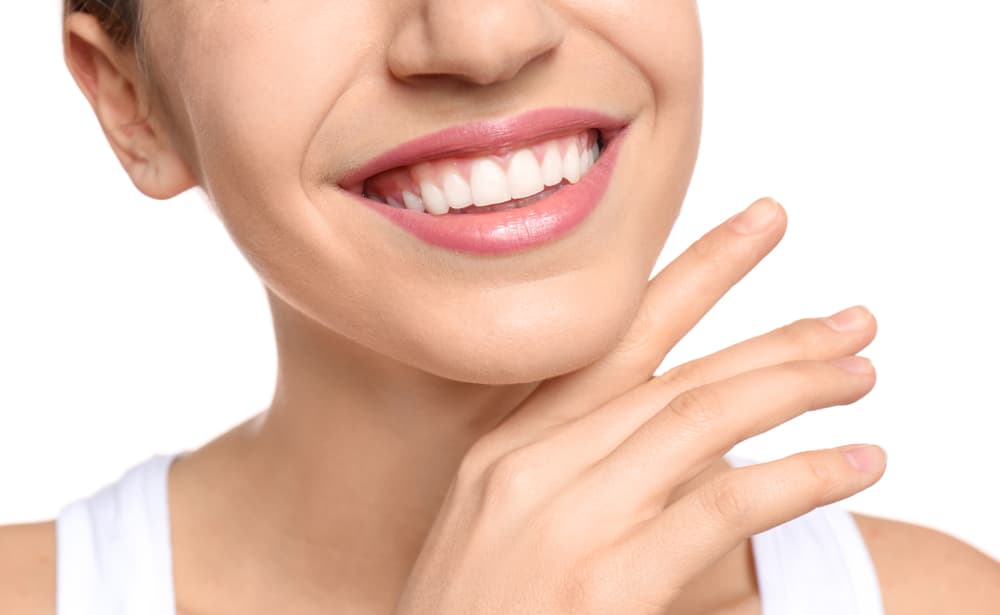
A Hollywood smile is a full smile makeover — the entire visible smile designed and treated as a whole, rather than one tooth fixed at a time. It is a result, not a single product, and understanding that is the key to having realistic expectations.
In practice, a Hollywood smile usually means restoring the teeth that show when you smile — the “smile zone” — with veneers or crowns, often combined with professional whitening of the surrounding natural teeth, and sometimes minor gum reshaping to even out the gum line. The point that makes it a Hollywood smile rather than a single veneer is the coordination: every tooth is designed in proportion with the others and with your face, so the finished smile is balanced and harmonious rather than a collection of individually treated teeth.
Which specific treatments go into yours depends entirely on the starting point of your teeth. Healthy teeth that simply need cosmetic improvement typically take veneers; teeth that are broken down, heavily filled or root-treated may need crowns instead. The makeover is built from whichever combination genuinely suits your mouth. You can see how these elements come together on our smile makeover page.
“Hollywood smile” describes the designed-as-a-whole outcome. The actual treatments behind it — veneers, crowns, whitening, gum work — are chosen to fit your teeth, not the other way around.
The biggest misconception about the Hollywood smile is that it means one thing: a fixed set of perfectly uniform, ultra-white teeth. That image comes from marketing, not from good dentistry, and it is worth letting go of.
A well-designed Hollywood smile is built around yourface — your features, your age, your skin tone and the shape of your other teeth — not a single template applied to everyone. The proportions of the teeth, their length and width, the subtle differences between them, and the shade are all tailored to suit the person. Two people can both have a Hollywood smile and look completely different, because a good result enhances the individual rather than overwriting them.
Teeth that are all identical in shape and an unnatural shade of white tend to read as obviously artificial, precisely because real teeth are never perfectly uniform. The most flattering results keep small natural variations — the slight differences in length and translucency that make teeth look real. If a clinic offers a single “Hollywood” shade and shape regardless of who is sitting in the chair, that is a sign the design is being driven by a template rather than by you.
A good Hollywood smile is planned carefully before any tooth is touched. The ability to see and approve the design first is one of the most valuable safeguards you can ask for.
Most reputable clinics begin with a process often called Digital Smile Design. Photographs and scans of your face and teeth are used to plan the proposed smile digitally — mapping out tooth shape, length, proportion and the gum line in relation to your facial features. Rather than guessing at the result, the design is worked out on screen first, so it can be discussed and adjusted while it costs nothing but time.
Many cases then include a trial smile or “mock-up” — a temporary preview placed over your teeth so you can actually see the proposed shape and length in your own mouth before anything permanent is done. This is the moment to be fussy: to check that the smile suits your face, that the shade looks right against your skin, and that you genuinely like it. A clinic confident in its work will welcome this stage and adjust the design until you are happy. Being able to preview and refine the outcome before committing protects you from disappointment and is a hallmark of a careful, honest practice.
Ask whether you will be shown a digital design and, ideally, a trial smile you can preview and approve. The right to see and adjust the result first is one of the best protections you have.
Here is the honest part. A blinding, uniform white smile is rarely the most attractive outcome, and chasing it often makes teeth look obviously false. The most flattering Hollywood smiles look natural — bright and tidy, certainly, but believable.
Natural beats blinding white almost every time. A shade that is a little softer and suited to your complexion tends to look healthier, younger and more convincing than the whitest option on the chart. Subtle, individual tooth shapes look more real than a row of identical rectangles. A good clinician will guide you towards a result that flatters your face rather than simply the most dramatic transformation, even when the most dramatic version is what is being marketed elsewhere.
There is also a conservative-care dimension to keeping it natural. A natural look is usually achievable with more conservative treatment — thinner veneers on healthy teeth, removing less tooth structure — whereas the most aggressive transformations sometimes involve filing healthy teeth down more than necessary. The over-aggressive approach is the basis of many “Turkey teeth” concerns, which you can read about in our guide on Turkey teeth problems. Choosing a natural, conservative result is therefore often the kinder choice for your long-term tooth health as well as your appearance.
If you want a Hollywood smile that genuinely suits your face and is planned conservatively, the best first step is an honest assessment. You can see how we approach it on our Hollywood smile page, or request a free, itemised plan designed around your own features.
A full smile makeover designed around your face — not a one-size mould — with honest pricing and real, consented results.
Read guideDigital smile design and a fully planned, multi-treatment transformation built around your features.
Read guideThe most common building block of a Hollywood smile — natural porcelain and e.max veneers, shade-matched with you.
Read guideShare a few photos and get an honest plan for a smile designed to suit your face, not a fixed template.
Read guide