Gum treatment at our Istanbul clinic covers two distinct areas: periodontal treatment for disease (gingivitis and periodontitis) and cosmetic gum procedures for patients who want to improve the appearance of their gum line. Both are performed by trained specialists — and if disease is present, it must always be addressed before any cosmetic work begins.
Treating gum disease: gingivitis and periodontitis
Gum disease is one of the most common oral health conditions globally, yet it is frequently undertreated because the early stages are painless. There are two main stages:
- Gingivitis — inflammation confined to the gum tissue, with no bone loss. Gums may bleed when brushed. At this stage the condition is fully reversible with professional cleaning and improved home care.
- Periodontitis — the infection has progressed to destroy the bone and connective tissue supporting the teeth. This stage causes permanent damage that can be arrested but not reversed. Teeth may become loose; bone loss becomes visible on X-ray.
Treatment for active gum disease is scaling and root planing(sometimes called a "deep clean") — the careful removal of calculus (tartar) from below the gum line and smoothing of the root surfaces to reduce bacterial adhesion. In more advanced periodontitis, surgical treatment to access deeper pockets may be required.
We do not place veneers, crowns or implants over infected gum tissue. Active periodontitis significantly increases the risk of implant failure and undermines the longevity of any restoration. If gum disease is found at your assessment, periodontal treatment comes first — always.
Gum contouring and gummy smile treatment
For patients with healthy gums who are unhappy with the appearance of their gum line, two cosmetic procedures are commonly performed in Istanbul:
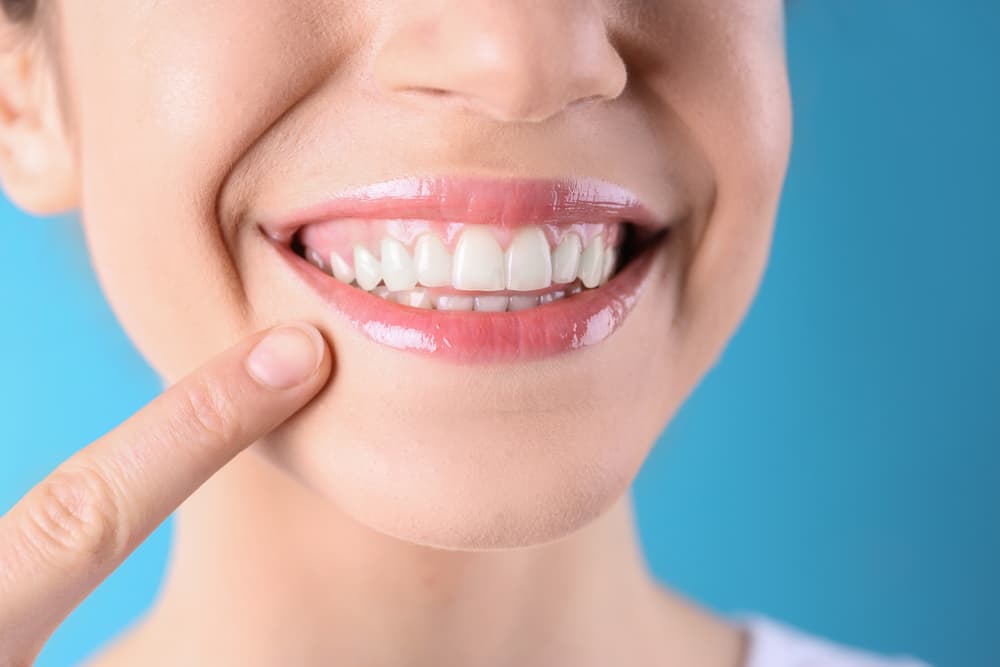
- Gum contouring (gingivoplasty):reshaping the gum line to correct an uneven contour, reduce excess gum tissue that makes teeth appear short, or prepare the tissue before veneers or crowns. Performed with a soft-tissue laser or surgical approach under local anaesthetic. Results are permanent; healing is typically complete within 2–4 weeks. This procedure directly addresses the look of a "gummy smile" caused by excess gum coverage.
- Gummy smile correction: where a significant proportion of gum shows when smiling, the cause determines the treatment. Excess gum tissue alone can be addressed with contouring. Where the issue is skeletal (the upper jaw sits low), a referral for orthognathic assessment may be more appropriate — and the clinical team will be honest about which category applies to your case.
Cosmetic gum procedures are frequently combined with veneers or crowns as part of a smile makeover — but only on confirmed healthy, disease-free tissue.
Gum recession treatment and grafting
Gum recession — where the gum margin pulls back to expose the root surface — is a common problem caused by aggressive brushing, periodontal disease, orthodontic movement or simply anatomy. Left untreated, recession leads to root sensitivity, increased decay risk, and eventual tooth loss.
The standard surgical treatment is a connective tissue graft: a small amount of tissue is taken from the palate (roof of the mouth) and grafted onto the recessed area to rebuild the gum margin. In some cases a donor allograft material can be used instead. Results are typically good but outcomes vary by site and degree of recession — the clinical team will give you an honest assessment of what can realistically be achieved in your case.
Gum graft healing takes 2–3 months for full integration. Most patients return home within a week of the procedure, but post-operative care with a local dentist is important. Discuss the full sequencing with the clinical team before travelling.
What gum treatment costs in Turkey
Gum treatment pricing varies considerably based on the extent of disease and which procedures are needed. The following are indicative starting points only — your itemised plan will be specific to your assessment.
| Procedure | Istanbul (indicative) | Notes |
|---|---|---|
| Scale & polish (maintenance) | from €80 | Per session |
| Scaling & root planing (deep clean) | from €150 | Per arch (upper or lower) |
| Gum contouring | from €200 | Per arch; depends on extent |
| Gum graft (connective tissue) | from €350 | Per site; multi-site quoted separately |
Prices above are indicative per-procedure starting points. The right approach — and therefore the cost — depends entirely on your clinical situation. Patients combining gum treatment with veneers or implants will have all costs itemised together in a single treatment plan. See a full cost comparison →