Veneers in Turkey
Conservative porcelain and e.max veneers, shade-matched with you before any preparation begins.
Read guide“Turkey teeth” has become shorthand for a specific pattern of bad outcomes — aggressive cosmetic work done quickly and cheaply abroad. Understanding exactly what goes wrong, and why, is the most effective way to make sure it does not happen to you.
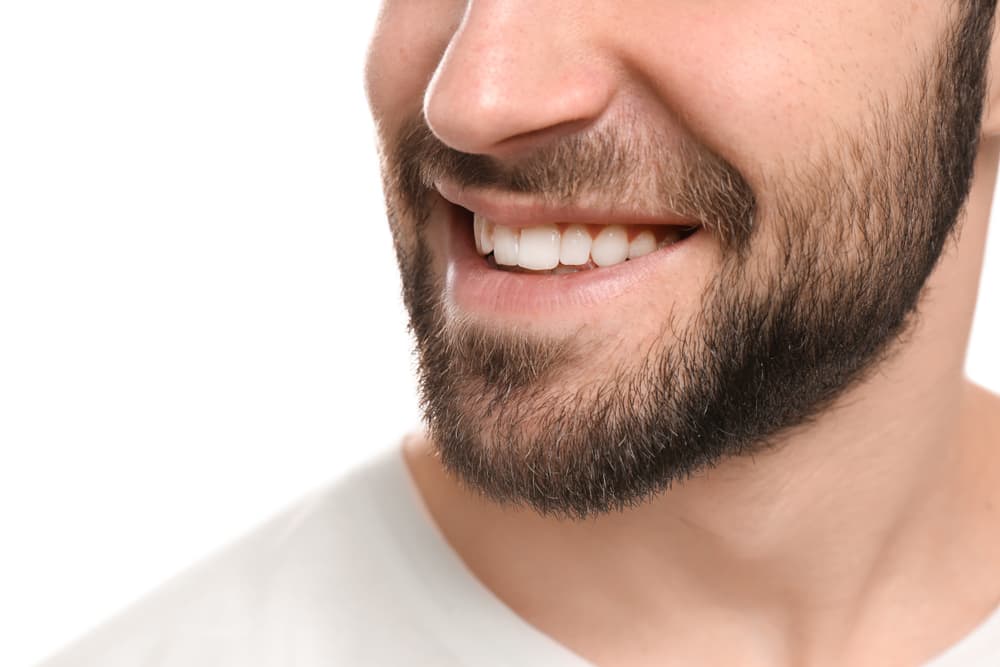
The phrase “Turkey teeth” entered widespread use through social media and tabloid coverage starting around 2021–2022. It describes a specific pattern of outcome — not a country, not a general standard of care, and not every patient who has had dental treatment in Turkey. Understanding the distinction matters, because conflating the two leads to poor decisions in both directions.
What the term actually describes is a cluster of related problems that tends to arise when patients choose cheap, high-volume cosmetic dental work abroad, often in a very short timeframe. The most common version involves this: a patient wants a whiter, more uniform smile. They find a clinic — often discovered through Instagram or TikTok — that offers a “full smile makeover in three days” for a price that seems too good to be true. They arrive, their teeth are ground down substantially, and a set of large, very white crowns is fitted. They fly home. Within weeks or months, problems begin — sensitivity, pain, gum irritation, or aesthetics that look nothing like what was promised.
The core of the problem is almost always one thing: full-coverage crowns were placed on teeth that did not need them. This is a clinical decision — an aggressive, irreversible one — that is dressed up as a cosmetic treatment. It is not specific to Turkey. It happens in other countries too. But it has become associated with Turkey because of the particularly high volume of cut-price, volume-first cosmetic tourism that targets UK, Irish, and Northern European patients travelling specifically to save money.
To be clear: Turkey also has excellent dental clinics that do none of these things, use conservative clinical approaches, and deliver outcomes that stand scrutiny. The problem is not Turkey. The problem is a specific type of clinic and a specific type of clinical decision — and the two can be identified and avoided.
“Turkey teeth” describes a pattern of over-aggressive cosmetic work — primarily crowns on healthy teeth — not the general quality of dental care in Turkey. Many patients receive excellent, conservative treatment in Turkey. The outcome depends on the clinic and the clinical approach, not the country.
The viral nature of the worst cases has created a distorted picture. For every patient who shares a horror story, there are many more who had uneventful, high-quality treatment and have nothing dramatic to post. This guide is not about discouraging treatment abroad — it is about helping you identify the specific things that go wrong and the specific steps that prevent them.
The accounts of bad experiences that have circulated widely are generally not fabricated. They describe real outcomes. What they often lack is clinical specificity about what actually caused those outcomes — which makes it harder to use them as useful guidance. Here is what the problems actually are, described precisely.
A veneer — done properly — removes a very small amount of enamel from the front surface of a tooth. Preparation depth for a standard porcelain veneer is typically 0.3–0.5mm. In minimal-preparation or “no-prep” approaches, the enamel may be barely touched at all. The tooth underneath is largely intact and the process, while technically irreversible in the sense that some enamel is removed, causes minimal structural change to the tooth.
A crown is a fundamentally different procedure. To fit a crown, the entire tooth is ground down from all sides to a small peg or stump — typically reducing its circumference by several millimetres around the full circumference. This is appropriate and clinically indicated for a tooth that is heavily damaged, has a large failing filling, is cracked, or has had a root canal and needs protection. It is not appropriate for a healthy, intact tooth that needs only cosmetic improvement.
What some volume-focused clinics have done — and what sits at the heart of most “Turkey teeth” cases — is offer crowns on healthy teeth as a shortcut to a fast, uniform-looking smile. Crowning many teeth at once is faster than doing veneers properly. It requires less technical precision. And it generates higher revenue per patient. The clinical cost is paid by the patient: permanent, irreversible damage to teeth that did not need it.
When a tooth is aggressively prepared for a crown — particularly when there is inadequate clearance and the preparation gets too close to the pulp chamber — the nerve inside the tooth can be damaged. This may manifest as immediate sensitivity to temperature or pressure, or as a delayed response where the nerve slowly dies. In the worst cases, patients return home with teeth that look cosmetically acceptable but develop worsening pain, require root canal treatment (which itself carries costs and clinical risks), and in some cases need extracting altogether.
Root canal treatment on a tooth that was previously healthy — needed solely because aggressive preparation damaged the nerve — is one of the most common outcomes reported by patients who have had bad cosmetic dental experiences abroad. In some cases this happens within months. In others it can take a year or two to become apparent.
A crown that does not fit precisely at the margin (the point where the crown meets the gum line) will allow bacteria to infiltrate the gap between the crown and the tooth surface. Over time this causes decay of the underlying tooth and chronic gum inflammation. Ill-fitting crowns are one of the reasons patients report persistent gum soreness and bleeding months after treatment. They may look acceptable to the untrained eye while causing ongoing clinical damage that is only visible on X-ray or on close clinical examination.
Adding crowns or veneers to multiple teeth in a very short period without adequate bite analysis and adjustment can alter the way the teeth meet when you chew or clench. Even small changes in bite height or position can translate into jaw pain, headaches, or accelerated wear on other teeth. In a properly managed case, bite is assessed and adjusted throughout the process. In rushed, volume-focused work, this step is often abbreviated or skipped entirely.
Beyond the clinical problems, many patients report that the aesthetic result they received was not what they expected or were shown. Teeth that appear very large or opaque in photos, that do not match the shade agreed, or that look obviously artificial in person are a common complaint. Unlike the clinical problems described above, these are often not dangerous — but they can require expensive corrective work from a UK or Irish dentist to address, which significantly undermines the original saving.
The problems described above do not arise by accident. They follow a recognisable pattern driven by identifiable factors. Understanding the mechanisms makes it much easier to identify the clinics and practices that produce these outcomes.
Some clinics in the dental tourism market are structured explicitly to process a high volume of patients in the shortest possible time. Their business model depends on turnover, not on the complexity of individual cases. For a high-volume clinic, a “full smile makeover in three days” is achievable if the entire treatment is crowns, which are fast to prepare and fit. Proper veneers, shade matching, and careful bite analysis take longer — and in a volume model, time is the constraint.
This is the single most important mechanism behind the worst outcomes. Crowns are faster to place en masse, require less precision, and can be fabricated in a centrally managed lab very quickly. Clinics that prioritise throughput will often recommend crowns for cases where veneers are clinically appropriate, presenting this as routine. Patients who are not familiar with the clinical difference between the two have no way to know that what is being proposed is unnecessarily aggressive.
Responsible cosmetic and restorative treatment requires proper assessment: clinical examination, photographs, X-rays, and in the case of implants or significant bite reconstruction, 3D cone beam imaging. Some clinics accept new international patients, take a brief look at their teeth, and begin preparation on the first visit — without any imaging, without any formal treatment planning document, and without proper bite analysis. This is not an acceptable clinical standard at any responsible practice, regardless of country.
The marketing of “full smile makeovers in 3–5 days” creates pressure on both clinic and patient to complete work faster than good clinical practice allows. Temporary restorations are rushed, final decisions are made quickly, and bite adjustments that should happen over multiple shorter appointments are compressed into single long sessions. The patient flies home before the clinical picture is fully stable, and problems that would have been caught in a more extended process are not identified until they are back in their home country.
When price is the primary or sole criterion, the competitive pressure inevitably drives some providers toward cutting corners to maintain margins. The clinics producing the worst outcomes are typically the cheapest ones — because the way to be the cheapest is to spend the least time and use the fastest methods, which is not the same as the best clinical care. Comparing quotes without understanding what is being offered is not a useful exercise. The relevant comparison is not the price — it is what you get for that price.
The good news is that the specific factors that produce bad outcomes are identifiable in advance. None of the following steps is unreasonable to ask of a responsible provider. If a clinic cannot or will not meet these standards, that tells you what you need to know.
If you are reading this after already having treatment that has not gone well, the most important thing to do first is: do not panic, and do not delay. Not all problems are as serious as they initially appear, and early assessment almost always leads to better outcomes than waiting.
Book an appointment with a local dentist — not for treatment yet, but for a proper assessment. This should include current X-rays and a clinical examination of every tooth that was treated. Bring any records you were given by the original clinic: written treatment plans, X-rays, material specifications, photographs. Ask the local dentist to assess the fit of every crown, the health of the surrounding gum tissue, the bite, and the condition of any tooth that has been prepared. Ask for a written report of their findings.
Before any corrective treatment begins, make sure you have a clear written record of what the original clinic did, what materials were used, and what problems you are now experiencing. This documentation is important both for your ongoing care and for any attempt to seek remedy from the original provider. Take photographs.
If your treatment was recent and you received a written guarantee, contact the original clinic in writing, describing your symptoms and what your local dentist has found. A responsible clinic will take this seriously and will discuss options — which may include video consultation with the treating dentist, or an arrangement for corrective work if the problem falls within the guarantee. Keep copies of all correspondence.
What is possible depends entirely on what has gone wrong. Ill-fitting crowns can sometimes be replaced with better-fitting restorations. Teeth with nerve damage may need root canal treatment before new crowns are placed. In cases of significant gum disease caused by poor margins, periodontal treatment is needed before any further restorative work. Teeth that have been lost may be candidates for implants. None of this is inexpensive, and none of it is guaranteed — your local specialist will give you a realistic assessment of what is recoverable for each tooth.
If a local dentist recommends extensive and expensive treatment, and you are not sure whether it is all necessary, getting a second opinion from a different practice is entirely reasonable. A specialist in prosthodontics or restorative dentistry can review the clinical picture independently and give you a clear picture of what needs addressing urgently and what can be monitored.
If you are experiencing significant pain, increasing sensitivity, or any sign of infection (swelling, discharge, fever), see a dentist urgently — do not wait. These are not problems to monitor; they need prompt assessment.
Conservative porcelain and e.max veneers, shade-matched with you before any preparation begins.
Read guideHow to vet a clinic, read a licence, and protect your long-term oral health.
Read guideA smile makeover designed around your face — not a one-size mould.
Read guideShare some photos and get an honest, itemised quote from a licensed specialist.
Read guide