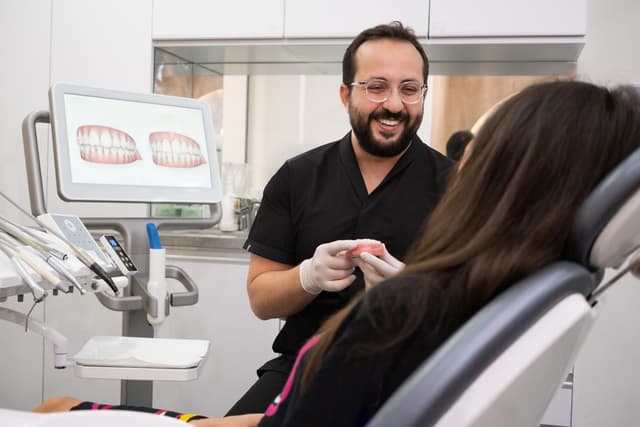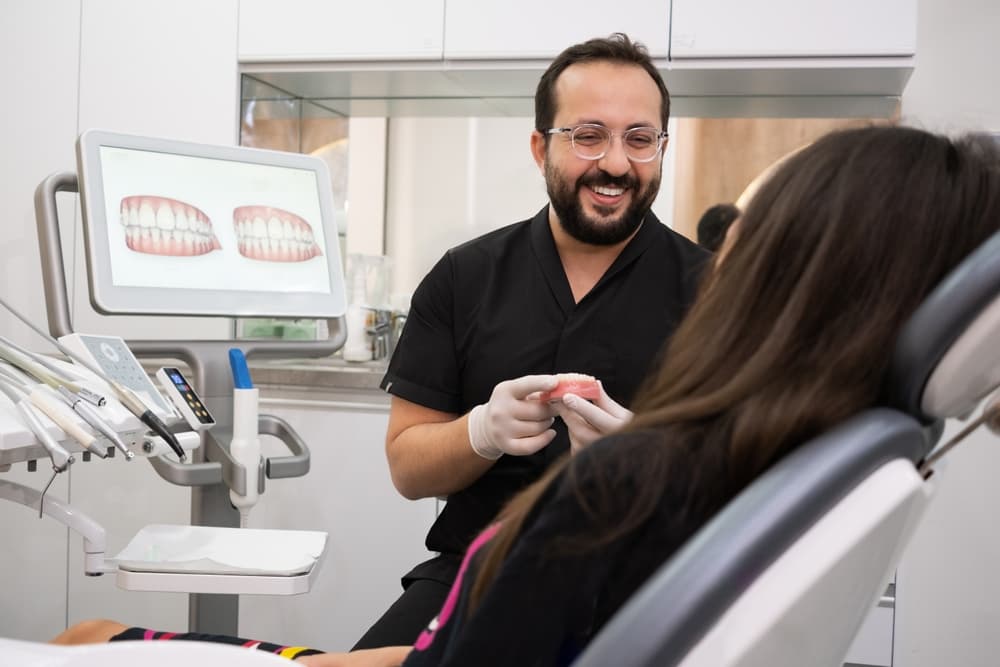
Invisalign uses a series of clear, removable plastic trays — each worn for about two weeks — to move teeth into the planned position gradually. An Istanbul orthodontist takes a digital scan of your teeth, the Align Technology software plans the tooth movements, and the aligner series is manufactured and supplied. The result, if all goes well, is straighter teeth without the visual impact or food restrictions of fixed braces.
Is Invisalign right for your case?
Clear aligners work well for a defined range of tooth movements. An orthodontist will assess whether Invisalign can achieve your goal — or whether fixed braces would produce a more predictable outcome.
- Good candidates: mild to moderate crowding, spacing, minor overbite or underbite corrections, and tooth alignment that does not require major rotation or vertical movement.
- Fixed braces may be better: significant rotations, large bite discrepancies, skeletal jaw misalignment, or cases where precise torque control is critical. For these, traditional braces — or a combination approach — tend to give a more reliable and stable result.
- Neither approach works without commitment: Invisalign requires 20–22 hours of daily wear. Compliance is the single biggest factor in whether treatment delivers the planned outcome.
An orthodontist will tell you clearly if Invisalign is not the right tool for your case. Being sold an aligner treatment when fixed braces would serve you better is a common risk in cosmetic dentistry — we aim to avoid it.
How Invisalign works
The process from initial scan to finished treatment involves several stages. Here is what to expect in sequence:
Orthodontic assessment
A full orthodontic examination, digital intra-oral scan (replacing traditional impressions) and photographs. The orthodontist reviews your bite, jaw relationship and tooth positions and confirms whether Invisalign is clinically appropriate.
Treatment planning (ClinCheck)
Your scan is uploaded to Align Technology's ClinCheck software. The orthodontist reviews and adjusts the planned tooth movements digitally. You can see a simulation of the expected result before any trays are made or any irreversible work begins.
Aligner manufacture & delivery
Your full series of aligners is manufactured by Align Technology. They are sent in batches — typically 3–6 trays at a time — so that each new set arrives as you progress through the previous one.
Wearing the aligners
You wear each tray for approximately two weeks, then move to the next. Some cases require small tooth-coloured attachments bonded to teeth to improve grip for specific movements. Wear time must be 20–22 hours per day.
Remote monitoring & refinements
Progress is reviewed remotely via photographs or a 3D scan app. If teeth have not tracked as planned, refinement aligners are prescribed — a normal and expected part of complex cases. A return visit to Istanbul may be arranged for refinement scans if needed.
Orthodontics abroad — honest expectations
This is the section most Invisalign Turkey pages skip. Orthodontic treatment is fundamentally different from most dental-holiday procedures, and patients should understand this before booking.
A crown, a set of veneers or even a full implant can be completed in a single trip of 5–10 days. Invisalign cannot. Treatment takes 6–18 months. The aligners are worn at home, not in Istanbul. Monitoring is remote. This means:
- You will not return to Istanbul for each check-up. Remote monitoring via photos or scan apps replaces in-person reviews. This is workable but requires you to engage with the monitoring process consistently.
- If problems arise, communication is digital. Aligner fit issues, unexpected tooth movement or sensitivity need to be reported promptly. Your Istanbul orthodontist is available remotely, but cannot examine you in person without a return trip.
- You may need a local dentist for emergencies. If an attachment falls off or a tray cracks, a local dentist may need to intervene. The Istanbul clinic can provide guidance and replacement trays, but cannot physically act from a distance.
- The saving is real, but proportionally smaller. Unlike a single-trip procedure where the travel cost is amortised over a large bill, orthodontic treatment costs involve one initial Istanbul trip plus remote support. The gross saving over UK or Irish prices is still meaningful — typically several hundred to a few thousand euros — but it is worth weighing against the reduced continuity of in-person care.
We only recommend Invisalign in Istanbul for patients who are comfortable with remote monitoring, who understand that treatment takes months, and who have a realistic picture of what this involves. If you are not sure, ask us — we will tell you honestly whether this model suits your situation.
What Invisalign costs in Turkey
Indicative pricing in Istanbul depends on the complexity of tooth movements required and the number of aligner stages planned. Below is a general guide — your itemised plan will be specific to your scan and case.
| Case complexity | Istanbul (indicative) | UK / Ireland (indicative) |
|---|---|---|
| Mild (Invisalign Lite / shorter series) | from €1,500 | £2,500–£3,500 |
| Moderate (full Invisalign series) | from €2,200 | £3,500–£5,000 |
| Complex (with refinements) | from €2,800 | £4,500–£6,500+ |
UK and Irish figures are indicative market ranges — your own orthodontist's quote may vary. Factor in flights and accommodation for Istanbul when calculating your net saving. See a full cost comparison →